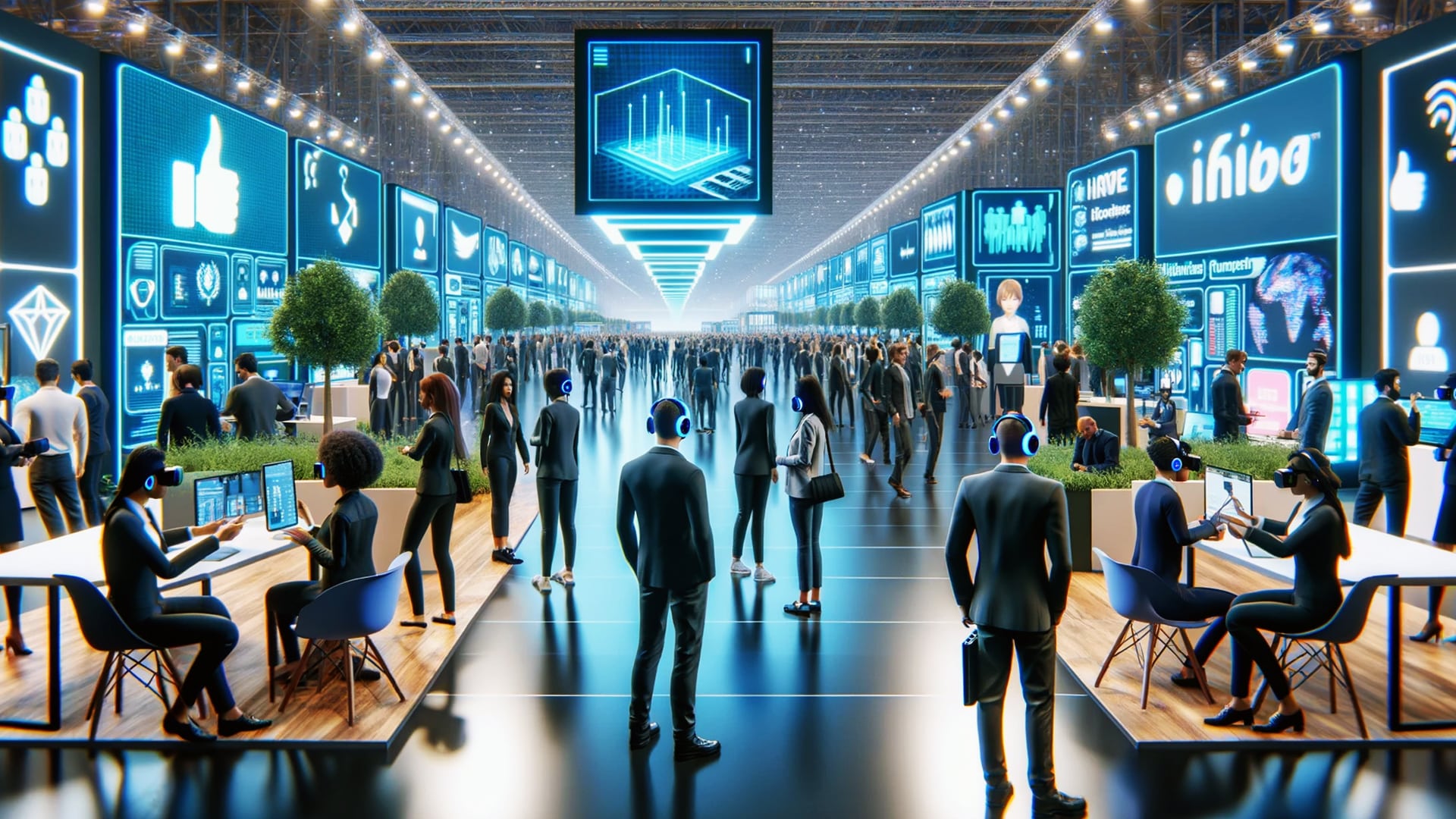

In the ever-evolving landscape of technology, virtual reality (VR) has emerged as a revolutionary tool, not just for entertainment and gaming, but as a powerful instrument in the corporate world, particularly within Human Resources (HR). Virtual Reality in HR is redefining traditional processes, offering innovative solutions for recruitment, training, employee engagement, and beyond. This article delves into how Virtual Reality in HR is transforming human resources management, providing business owners and corporate clients with a comprehensive understanding of its applications and benefits.
Recruitment and Onboarding
One of the most significant applications of Virtual Reality in HR is in the recruitment and onboarding process. VR enables companies to create immersive experiences for potential candidates, offering virtual tours of the office, realistic job previews, and interactive simulations of job tasks. This not only enhances the candidate’s understanding of the role and company culture but also allows HR professionals to assess a candidate’s skills and fit in a dynamic, interactive environment. For instance, a study by PwC found that candidates trained with VR were up to four times more focused than their e-learning counterparts, showcasing VR’s effectiveness in engaging prospective employees.
Training and Development
Virtual Reality in HR has revolutionized training and development. Traditional training methods often struggle to replicate real-life scenarios effectively. VR overcomes this hurdle by providing immersive, hands-on experiences without the risks associated with on-the-job training. Employees can practice their skills in a safe, controlled virtual environment, which can be particularly beneficial for high-risk industries such as construction, healthcare, and manufacturing. VR training has been shown to improve retention rates; according to the National Training Laboratory, retention rates for lecture-style learning are only 5%, compared to 75% for learning by doing, which VR effectively simulates.
Enhancing Employee Engagement and Collaboration
Employee engagement is crucial for productivity and retention, and Virtual Reality in HR offers new avenues to enhance this. VR can create unique team-building experiences and social interactions, especially for remote teams. Virtual meeting spaces allow for more engaging and interactive sessions compared to traditional video calls, helping employees feel more connected and part of a team. Furthermore, VR can simulate challenging scenarios for teams to navigate together, fostering collaboration, problem-solving skills, and camaraderie.
Workplace Diversity and Inclusion
Virtual Reality in HR can also play a pivotal role in promoting workplace diversity and inclusion. Through immersive experiences, employees can gain perspectives on the challenges faced by their colleagues from different backgrounds, fostering empathy and understanding. VR scenarios can be designed to train employees on diversity, equity, and inclusion principles, helping to combat unconscious bias and create a more inclusive workplace culture.
Remote Work and Virtual Offices
As remote work becomes increasingly prevalent, Virtual Reality in HR offers solutions to some of its challenges. VR can create a sense of presence and immersion that remote work often lacks, enabling employees to feel like they are in the office with their colleagues. Virtual reality offices can replicate the social interactions and spontaneous conversations that occur in physical offices, enhancing collaboration and maintaining company culture in a remote work environment.
Challenges and Considerations
While Virtual Reality in HR presents numerous opportunities, there are also challenges to consider. The cost of VR technology and the need for specialized equipment can be significant, especially for small businesses. Additionally, there is a learning curve associated with using VR, and companies must ensure that employees have the necessary training and support. Privacy and data security are also crucial considerations, as VR applications often collect sensitive user data.
Virtual Reality in HR is transforming human resources management, offering innovative solutions for recruitment, training, employee engagement, and more. Its ability to create immersive, realistic experiences offers unparalleled opportunities for businesses to improve their HR processes. However, successful implementation requires careful consideration of the technology’s challenges and costs. As VR technology continues to evolve and become more accessible, its role in HR is set to become even more significant, offering exciting possibilities for the future of human resources management.
Incorporating Virtual Reality in HR not only enhances the efficiency and effectiveness of HR processes but also positions companies as forward-thinking, attractive to potential employees, and committed to leveraging cutting-edge technology for the betterment of their workforce. As we move forward, the integration of Virtual Reality in HR will undoubtedly continue to grow, reshaping the landscape of human resources in ways we are just beginning to understand.