
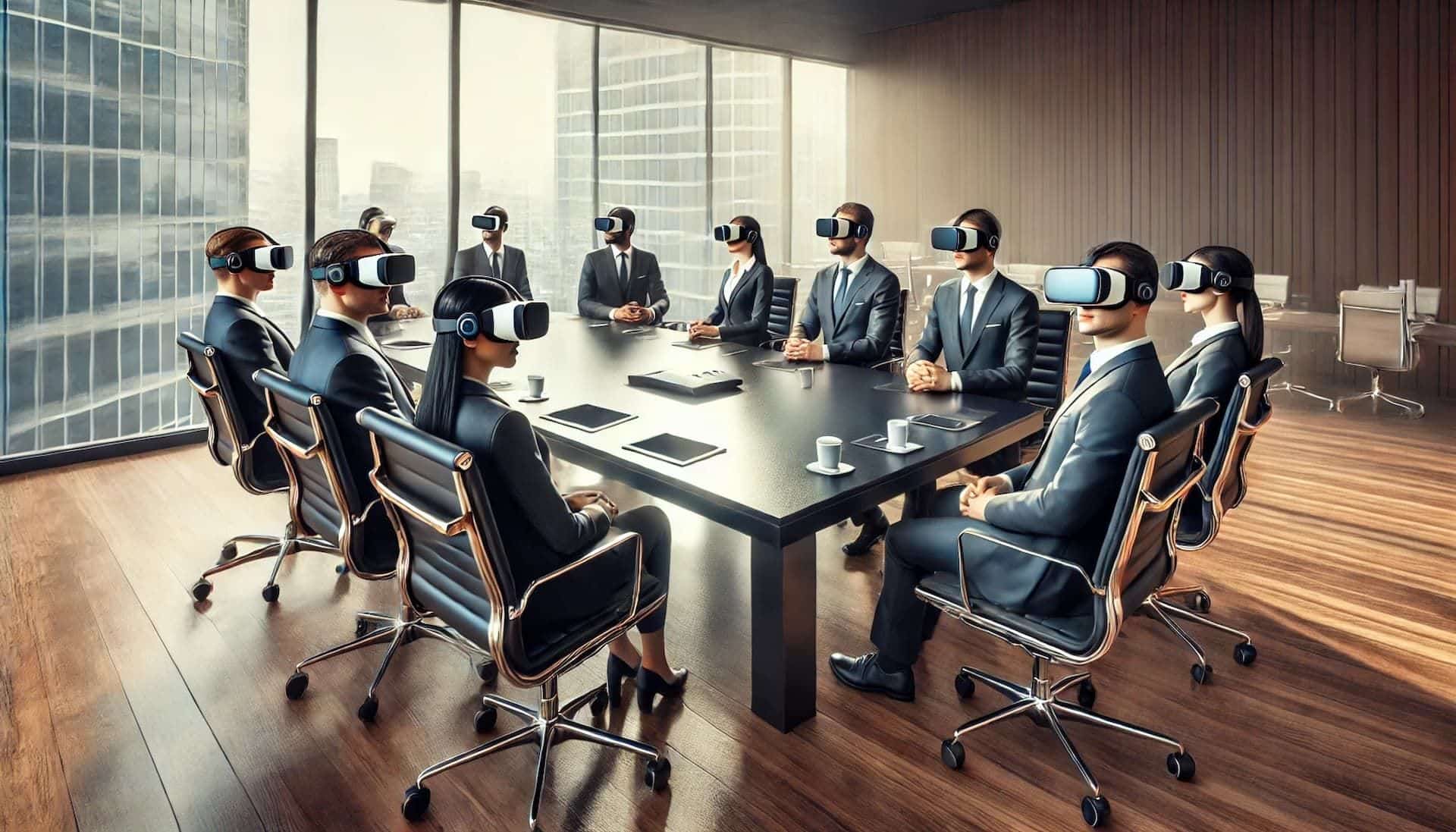
Virtual Reality (VR) has transformed numerous sectors, from gaming to education, by providing immersive experiences that push the boundaries of traditional interfaces. Now, VR is making its mark in the corporate world through the innovative concept of Boardroom VR. This technology integrates VR into business meetings and conferences, offering new ways to collaborate and engage.
The Need for Boardroom VR
Traditional meetings and conferences come with their own set of challenges. Geographic limitations can hinder participation, especially for global teams. Travel expenses for in-person meetings can be significant, encompassing flights, accommodation, and other logistical costs. Additionally, traditional meeting formats can struggle with engagement, often leading to uninspired discussions and reduced productivity.
In an increasingly digital world, the corporate sector is seeking innovative solutions to overcome these limitations. As businesses embrace digital transformation, there is a growing demand for technologies that enhance communication and collaboration. Boardroom VR emerges as a compelling solution, offering a virtual environment that addresses the shortcomings of conventional meetings.

Benefits of Boardroom VR
Enhanced Collaboration
Boardroom VR provides an interactive and immersive meeting experience that traditional methods can’t match. VR allows participants to engage in 3D presentations, view virtual whiteboards, and visualize real-time data in a more interactive manner. For instance, virtual whiteboards enable team members to brainstorm and manipulate ideas collaboratively, while 3D models can be examined from different angles, enhancing understanding and discussion.
Cost Reduction
One of the significant advantages of Boardroom VR is its potential for cost savings. By reducing the need for travel, accommodation, and other expenses associated with in-person meetings, businesses can significantly lower their operational costs. Case studies have shown that companies implementing VR for meetings have seen substantial reductions in travel budgets and associated expenses, proving the cost-efficiency of this technology.
Work Flexibility
Boardroom VR supports remote work and global collaboration by allowing teams to connect from different locations as if they were in the same room. This flexibility is particularly beneficial for multinational corporations and remote teams. Real-world applications have demonstrated that businesses leveraging VR can maintain productivity and collaboration without the constraints of geographical distance, enhancing overall operational efficiency.
Improved Engagement
VR can make meetings more engaging and productive by providing an immersive experience that captures participants’ attention. Studies have indicated that VR meetings can lead to increased retention and participation compared to traditional formats. By creating a more engaging environment, Boardroom VR helps ensure that meetings are not only more interactive but also more effective.

Key Features of Boardroom VR Solutions
Immersive Environment
Boardroom VR solutions often feature virtual office spaces and customizable meeting rooms that mimic real-life settings. These environments are designed to enhance the user experience by providing a sense of presence and realism. Customizable elements allow businesses to create virtual spaces that align with their corporate identity and meeting needs.
Interactive Tools
Interactive tools are a crucial component of Boardroom VR. Features such as virtual whiteboards, 3D models, and shared screens enable seamless collaboration and brainstorming sessions. These tools are essential for effective communication and idea sharing, allowing participants to interact with content in a dynamic and intuitive manner.
Security and Privacy
Security is a top priority for Boardroom VR solutions. Providers ensure that data is protected through encryption, secure logins, and robust user authentication measures. These security features are designed to safeguard sensitive corporate information and maintain privacy during virtual meetings.
Implementing Boardroom VR
Initial Setup
To implement Boardroom VR, businesses need to invest in specific hardware and software. Popular VR headsets, such as the Oculus Quest or HTC Vive, along with VR platforms designed for corporate use, form the core of the setup. Companies should also consider the technical requirements for running VR software, including sufficient computing power and internet connectivity.
Training and Onboarding
Effective use of Boardroom VR requires proper training and onboarding. Employees should be familiarized with VR hardware and software through workshops, tutorials, and support resources. This training ensures that all team members can navigate the VR environment efficiently and make the most of its features.
Integration with Existing Systems
Boardroom VR solutions should integrate seamlessly with existing IT infrastructure. This includes compatibility with current communication tools, file-sharing systems, and project management platforms. Ensuring a smooth integration process helps maintain workflow continuity and minimizes disruption during the transition to VR meetings.
Challenges and Considerations
Technical Issues
Technical challenges, such as hardware malfunctions or software glitches, can impact the effectiveness of Boardroom VR. Businesses should ensure reliable internet connectivity and regular updates to address these issues. Having technical support readily available can also help mitigate potential disruptions.
User Adaptation
Resistance to new technology can be a barrier to adoption. To encourage employees to embrace Boardroom VR, businesses should address concerns and highlight the benefits of the technology. Strategies such as showcasing successful use cases and providing ongoing support can help facilitate a smooth transition.
Investment and ROI
The initial investment in Boardroom VR can be substantial, covering hardware, software, and training costs. However, the long-term benefits, such as cost savings on travel and enhanced productivity, can justify the investment. Case studies of companies that have experienced positive ROI from Boardroom VR can provide valuable insights for businesses considering this technology.
Future Trends and Innovations
Emerging Technologies
The future of Boardroom VR holds exciting possibilities with emerging technologies. Advancements in haptic feedback could enhance the tactile experience of virtual meetings, while AI-driven virtual assistants could provide real-time support and information. Improved graphics and more immersive environments will continue to evolve, further enhancing the VR experience.
Market Outlook
The Boardroom VR market is expected to grow as businesses increasingly recognize the value of virtual meetings. Industry reports and expert predictions suggest a positive outlook for VR technology in corporate settings, driven by ongoing advancements and the growing need for innovative collaboration solutions.
Boardroom VR represents a significant advancement in how businesses conduct meetings and collaborate. By addressing the limitations of traditional meeting formats and offering new ways to engage, collaborate, and save costs, VR technology is poised to transform the corporate world. Businesses are encouraged to explore and invest in Boardroom VR to stay ahead in the digital age and unlock the full potential of virtual collaboration.